Welcome to Asphalt Calculator 2026. Planning an asphalt project in 2026? Whether you’re paving a driveway, parking lot, private road, or commercial surface, knowing exactly how much asphalt you need — and how much it will cost — is critical. That’s where our Asphalt Calculator 2026 comes in.
Table of Contents
Introduction:
This free online calculator helps homeowners, contractors, and construction professionals quickly calculate asphalt volume, weight, and estimated cost using precise industry-standard formulas. With support for both Imperial and Metric units, this tool removes guesswork and prevents costly over-ordering or under-ordering.
Below, you’ll find a complete guide explaining:
- How asphalt calculations work
- How to use the calculator correctly
- Asphalt thickness recommendations
- Cost factors in 2026
- Common mistakes to avoid
- Professional tips for better results
Why You Need an Asphalt Calculator in 2026
Asphalt prices, material density, and construction standards continue to change. In 2026, asphalt costs are affected by:
- Rising fuel and transportation costs
- Regional material availability
- Thickness requirements based on usage
- Waste and compaction factors
Manually calculating asphalt quantities often leads to errors — even a small mistake can result in thousands of dollars in losses on larger projects.
An accurate asphalt calculator ensures:
- Correct material estimation
- Better budgeting
- Less waste
- Faster project planning
What Is Asphalt Made Of?
Before calculating asphalt quantities, it’s important to understand what asphalt actually is.
Asphalt (also called hot mix asphalt) is a blend of:
- Aggregates (crushed stone, gravel, sand)
- Asphalt binder (bitumen)
This mixture is heated and applied hot, then compacted to create a durable surface.
Average Asphalt Density
- Imperial: ~145 lbs per cubic foot
- Metric: ~2,322 kg per cubic meter
Our calculator uses industry-standard density values to ensure accurate results.
How the Asphalt Calculator 2026 Works
The calculator estimates asphalt requirements based on volume, then converts that volume into weight (tons) and estimated cost.
Required Inputs
You only need four values:
- Width
- Length
- Depth (Thickness)
- Price per ton (optional)
You can select units for each input, making the calculator flexible for both US and international users.
Supported Units
Imperial System
- Width & Length: feet
- Depth: inches
- Weight: tons
- Cost: USD
Metric System
- Width & Length: meters
- Depth: centimeters
- Weight: tonnes
- Cost: local currency
All unit conversions happen automatically.
Asphalt Calculation Formula Explained
Here’s what happens behind the scenes:
Step 1: Calculate Volume
Volume = Width × Length × Depth
Step 2: Convert Depth to Feet (Imperial)
Depth (inches ÷ 12)
Step 3: Calculate Weight
Weight = Volume × Asphalt Density
Step 4: Convert Pounds to Tons
Tons = Pounds ÷ 2000
Step 5: Calculate Cost (Optional)
Cost = Tons × Price per ton
You don’t need to do this manually — the calculator handles everything instantly.
Recommended Asphalt Thickness by Project Type
Choosing the correct asphalt thickness is crucial for durability.
Residential Driveways
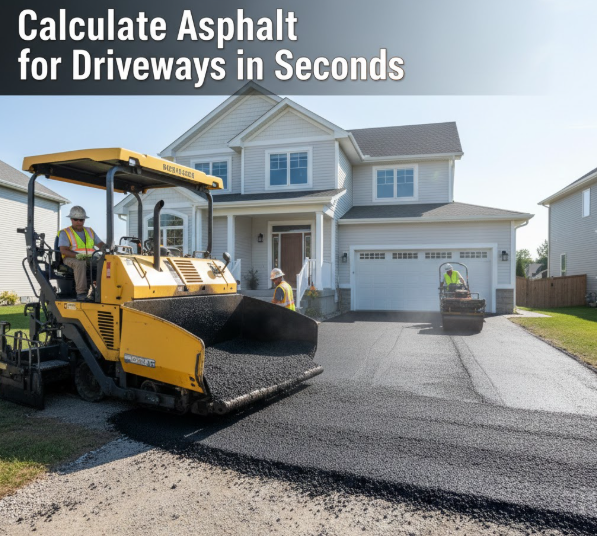
- 2–3 inches
- Suitable for cars and light vehicles
Parking Lots
- 3–4 inches
- Handles moderate traffic
Roads & Heavy Traffic Areas
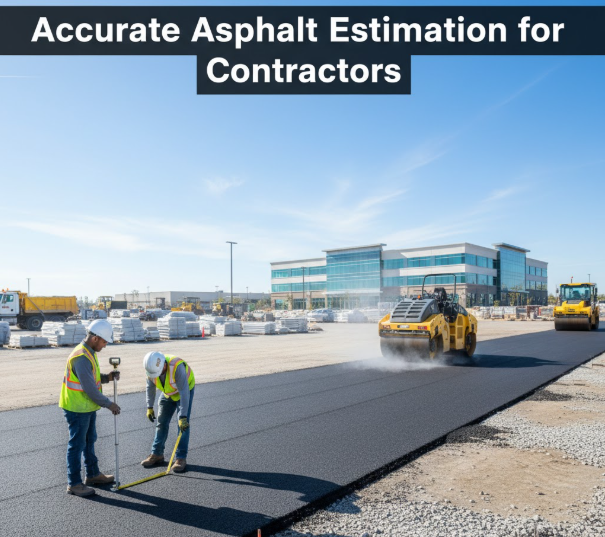
- 4–6 inches
- Designed for trucks and commercial use
Asphalt Over Existing Pavement
- 1.5–2 inches
- Resurfacing projects
Asphalt Cost in 2026 – What to Expect
Asphalt prices vary by region, but average costs in 2026 are:
- $90 – $150 per ton (material only)
- Installation may add $3 – $7 per square foot
Cost Factors Include:
- Thickness
- Surface preparation
- Labor rates
- Project size
- Location
Using an asphalt calculator before requesting quotes gives you pricing leverage and helps detect overcharging.
Why Accurate Asphalt Estimation Matters
Avoid Material Shortages
Running out of asphalt mid-project can:
- Delay work
- Increase labor costs
- Affect surface quality
Prevent Overspending
Ordering too much asphalt:
- Wastes money
- Creates disposal problems
Improve Project Scheduling
Correct estimates help:
- Coordinate deliveries
- Optimize labor time
- Reduce downtime
Common Asphalt Calculation Mistakes
Many people make these errors when estimating asphalt manually:
- ❌ Forgetting to convert inches to feet
- ❌ Using incorrect density values
- ❌ Ignoring compaction loss
- ❌ Not accounting for waste (5–10%)
Our calculator minimizes these risks by using standardized values.
Should You Add a Waste Factor?
Yes — professionals usually add 5–10% extra asphalt to cover:
- Spillage
- Uneven surfaces
- Compaction loss
You can manually increase your final tonnage slightly to stay safe.
Who Should Use This Asphalt Calculator?
This tool is ideal for:
- Homeowners planning driveways
- Asphalt contractors
- Construction estimators
- Civil engineers
- Property developers
- Landscaping companies
Whether it’s a small residential project or a large commercial job, this calculator saves time and money.
Asphalt Calculator vs Manual Estimation
| Feature | Calculator | Manual |
|---|---|---|
| Speed | Instant | Slow |
| Accuracy | High | Error-prone |
| Unit conversion | Automatic | Manual |
| Cost estimation | Included | Complex |
| User-friendly | Yes | No |
How to Use the Asphalt Calculator
- Enter width
- Enter length
- Enter depth
- Choose units
- Add price per ton (optional)
- Click Calculate
Your results appear instantly below the calculator.
Why Our Asphalt Calculator Is Better
Unlike basic tools, our Asphalt Calculator 2026:
- Uses updated density values
- Supports multiple unit systems
- Shows weight and cost
- Has a clean, professional UI
- Works on all devices
It’s designed for real-world construction needs, not just theory.
Final Thoughts
Accurate asphalt estimation is no longer optional — it’s essential. Whether you’re planning a simple driveway or managing a large paving project, this Asphalt Calculator 2026 gives you confidence, clarity, and control.
Use it before ordering materials, before calling contractors, and before finalizing your budget.
👉 Bookmark this page and use the calculator anytime you plan an asphalt project.
Our Other Tools:
Exam Score Calculator Tools
How accurate is this asphalt calculator?
Our Asphalt Calculator 2026 uses industry-standard hot mix asphalt density (145 lbs/ft³ or 2322 kg/m³) to deliver highly accurate volume and weight estimates. While real-world conditions may vary slightly due to compaction and mix type, results are accurate enough for budgeting, material ordering, and planning.
How much asphalt do I need for a driveway?
Most residential driveways require 2 to 3 inches of asphalt thickness. By entering your driveway’s width, length, and depth into the calculator, you’ll instantly get the required asphalt volume, weight in tons, and estimated cost.
Should I order extra asphalt than the calculator result?
Yes. Professionals recommend ordering 5–10% extra asphalt to account for compaction loss, uneven surfaces, and material waste. This helps prevent delays and additional delivery costs.
Does the asphalt calculator support both metric and imperial units?
Absolutely. The calculator supports Imperial units (feet, inches, tons) and Metric units (meters, centimeters, tonnes). You can also select different units for width, length, and depth individually.
Can this calculator estimate asphalt cost?
Yes. By entering the price per ton, the calculator instantly estimates the total asphalt material cost, helping you plan your budget before contacting contractors or suppliers.
